| DifficultyEasy | Total Time5 min | Prep Time5 min | Cook Time0 min |
| Serves1 | Cost Per Serving~$2.00 | Calories200 kcal | Recipe TypeSnack |
This Smart Snack Portioning guide transforms how you fuel your body between meals and prevents energy crashes throughout the day. Most people grab whatever’s convenient when hunger strikes, leading to unstable blood sugar and endless cravings.
The right approach to snacking keeps your energy consistent and your appetite satisfied for hours, not minutes. You’ll learn which foods truly fill you up and why timing matters as much as food choice.
Why You’ll Love This Guide
- Science-Based – Protein and fiber combinations keep you full 2-3 times longer than processed snacks.
- Flexible System – The 100-200-300 calorie method matches snack size to your actual hunger level.
- Energy Stability – Prevents afternoon crashes and late-night cravings through blood sugar management.
- Practical Tools – Simple prep strategies and troubleshooting for common challenges.
- Mindful Approach – Builds awareness of true hunger signals versus emotional eating triggers.
Recommended Snack Storage
* As an Amazon Associate I earn from qualifying purchases at no extra cost to you.
Smart Snack Portioning Guide
Your hunger signals exist for good reasons and ignoring them leads to overeating at meals. Smart snacking bridges the gap between meals without derailing your energy or health goals.
Understanding Your Body’s Energy Patterns
Your blood sugar naturally fluctuates throughout the day, rising after eating then gradually declining over the next few hours. When blood sugar drops too low, your body sends urgent hunger signals that often lead to grabbing whatever’s available.
Processed snacks create dramatic spikes and crashes in blood sugar while balanced snacks release energy slowly and steadily. Apple slices with almond butter provide sustained fuel that carries you comfortably to your next meal.
The Protein and Fiber Foundation
Protein takes more energy to digest than carbohydrates or fat through a process called the thermic effect. Fiber slows down digestion and helps regulate blood sugar absorption while adding bulk without calories.
- High-protein options – Greek yogurt, nuts, hard-boiled eggs, cottage cheese
- Fiber-rich choices – fresh fruits, raw vegetables, whole grain crackers
- Healthy fats – avocado, olive oil, nut butters in small amounts
Recognizing True Hunger vs Eating Triggers
Not every urge to eat represents genuine hunger and learning to distinguish between physical hunger and other eating triggers helps you snack only when your body actually needs fuel. Physical hunger builds gradually and can wait while emotional or habitual eating feels urgent.
True hunger accepts various food options and feels satisfied with appropriate portions. Stress eating often craves crunchy or sweet foods specifically while boredom eating happens when you’re understimulated rather than truly hungry.
The 10-Minute Hunger Check
Before reaching for a snack, try this simple assessment to determine if you’re actually hungry.
- Drink a glass of water and wait 10 minutes to rule out thirst.
- Rate your hunger on a scale of 1-10, where 5-6 indicates true snacking time.
- Ask yourself what triggered the urge – was it seeing food, stress, or actual hunger signals?
The Calorie Building Block Method
Different situations call for different snack sizes and the building block approach gives you flexible options based on your hunger level and schedule. Each tier provides specific benefits for different scenarios.
100-Calorie Light Snacks
Perfect for mild hunger or when your next meal is within two hours. These snacks take the edge off without affecting your appetite for regular meals.
- 1 medium apple
- 1 cup baby carrots with 2 tablespoons hummus
- 1 string cheese
- 10 almonds
200-Calorie Moderate Snacks
The sweet spot for most snacking situations that provide lasting satisfaction for 3-4 hours between meals.
- Greek yogurt with fresh berries
- Apple slices with 1 tablespoon peanut butter
- Whole grain toast with half an avocado
- Small smoothie with protein powder
300-Calorie Substantial Snacks
Best for active individuals or long gaps between meals that function almost like mini-meals to sustain energy for extended periods.
- Cottage cheese bowl with fruit and nuts
- Whole grain crackers with cheese and grapes
- Trail mix with dried fruit and seeds
- Protein smoothie with nut butter
Building Balanced Snack Combinations
Single-ingredient snacks rarely provide lasting satisfaction and the most effective snacks combine multiple macronutrients to slow digestion and extend fullness. Think of snacks as mini-meals with protein, carbohydrates, and often a small amount of healthy fat.
The Perfect Snack Formula
- Apple + Almond Butter – Natural sugars with protein and healthy fats
- Greek Yogurt + Berries – High protein with antioxidants and fiber
- Whole Grain Crackers + Cheese – Complex carbs with protein and calcium
- Vegetables + Hummus – Fiber and plant protein with healthy fats
Timing Your Snacks for Optimal Energy
When you snack matters as much as what you eat and poor timing can interfere with meal appetite or disrupt sleep patterns. Most people benefit from snacks 2-3 hours after meals when blood sugar naturally begins to decline.
The 3 PM energy dip is natural and predictable so plan for it with a protein-rich snack that provides steady energy without overstimulating. Avoid high-sugar options that create another crash later and choose snacks that sustain you until dinner without spoiling your appetite.
Mindful Snacking Practices
How you eat affects how much you eat and how satisfied you feel afterward. Distracted eating leads to overconsumption and reduced meal satisfaction while mindful snacking means eating with attention and intention.
Portion snacks onto plates or bowls rather than eating from packages and sit down away from screens, work, or other distractions. Chew slowly and notice flavors, textures, and aromas to allow fullness signals time to reach your brain.
Practical Implementation Strategies
Knowledge without action produces no results and the key to successful snack portioning lies in preparation and consistency. Set yourself up for success by making healthy choices the easiest choices while removing barriers to good decisions.
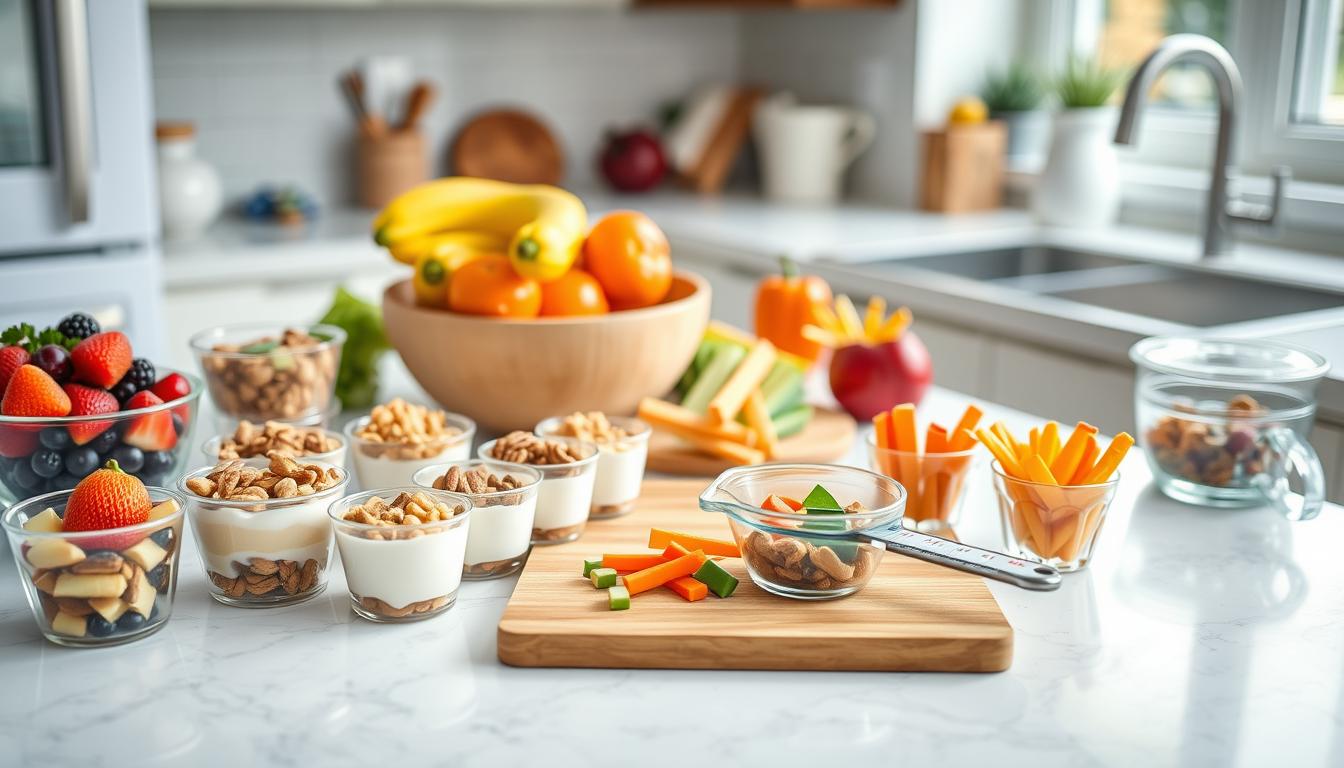
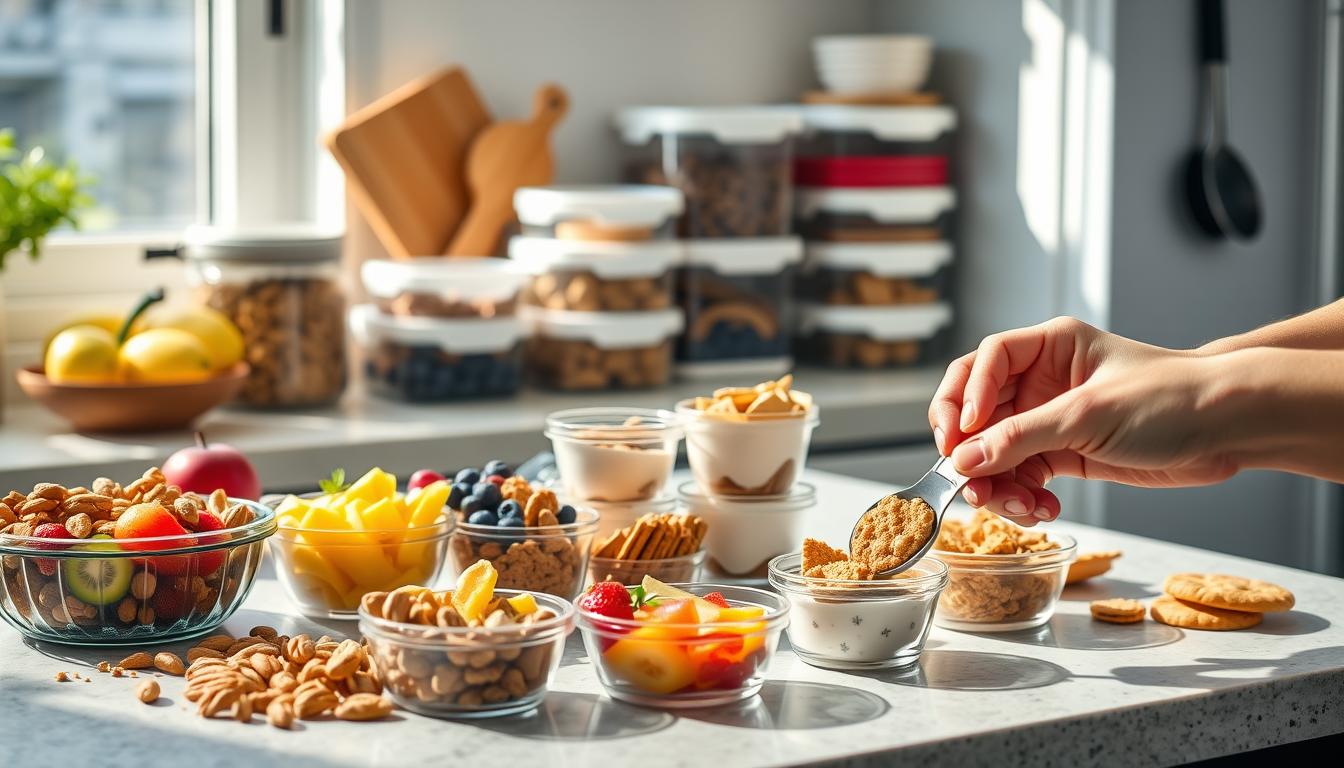
Wash and cut vegetables immediately after shopping and store them in clear containers at eye level in your refrigerator. Pre-portion nuts, seeds, and dried fruits into single-serving containers to eliminate guesswork and prevent accidental overeating.
- Wash berries and store in glass containers
- Cut vegetables and pair with individual hummus cups
- Hard-boil eggs in batches for grab-and-go protein
- Portion trail mix into small bags or containers
For more ideas on building sustainable eating habits, check out healthy meal prep strategies that complement smart snacking approaches and learn about batch cooking techniques that can streamline your snack preparation routine.
Troubleshooting Common Challenges
Even with good intentions, snacking challenges arise and understanding common obstacles helps you develop solutions before problems derail your progress. Most snacking problems stem from inadequate planning, unrealistic expectations, or trying to change too many habits simultaneously.
Cravings for chips, cookies, or candy are normal, especially when transitioning to healthier snacks since these foods are designed to trigger desire and overconsumption. Don’t try to eliminate all processed snacks immediately but instead upgrade gradually by choosing better versions or smaller portions of favorite treats.
Frequently Asked Questions
How do I know if I actually need to snack between meals?
Listen to your body’s hunger signals – stomach growling, low energy, or difficulty concentrating indicate genuine hunger. If you can go comfortably from meal to meal without these symptoms, snacking may not be necessary for you.
What’s the difference between a 100-calorie and 200-calorie snack in terms of satisfaction?
A 100-calorie snack typically satisfies mild hunger for 1-2 hours, while a 200-calorie snack with protein and fiber can keep you full for 3-4 hours. The larger snack prevents multiple small eating episodes that can add up to more calories overall.
Why do I still feel hungry after eating fruit as a snack?
Fruit alone lacks protein and fat to slow digestion and create lasting fullness. Try pairing fruit with protein sources like Greek yogurt, cheese, or nut butter for better satiety.
Can I prepare healthy snacks in advance without losing nutritional value?
Most snack prep maintains nutritional value for 3-5 days when stored properly. Pre-cut vegetables, hard-boiled eggs, and portioned nuts all hold up well with advance preparation.
How do I handle cravings for specific unhealthy snacks?
Cravings often indicate nutrient needs or emotional triggers rather than true hunger. Try drinking water first, then choose a healthy snack with similar flavors or textures to satisfy the craving without derailing your Smart Snack Portioning goals.
