

| DifficultyEasy | Total Time5 min | Prep Time5 min | Cook Time0 min |
| ServesN/A | Cost Per Serving$15-40 | CaloriesN/A | Recipe TypeKitchen Guide |
This Kitchen Whisk Guide covers everything you need to know about choosing and using the right whisk for your cooking needs. From balloon whisks for whipping cream to flat whisks for gravies, understanding the different types will improve your kitchen skills.
A quality whisk is essential for mixing ingredients, creating smooth sauces, and aerating batters. The right whisk can make the difference between lumpy gravy and silky smooth results.
Why You’ll Love This Kitchen Whisk Guide
- Complete Coverage – Learn about all the essential whisk types and their specific uses.
- Practical Tips – Master proper whisking techniques for better cooking results.
- Material Guide – Understand the benefits of stainless steel, silicone, and nylon options.
- Care Instructions – Keep your whisks in perfect condition with proper maintenance.
- Expert Advice – Avoid common mistakes and improve your whisking skills.
Kitchen Whisk Guide
Complete guide to choosing and using whisks for better cooking results.
Essential Whisk Types
- Balloon whisk for whipping and aerating
- French whisk for general mixing and sauces
- Flat whisk for gravies and roux
- Mini whisk for small tasks
Key Features to Look For
- Material choice. Consider stainless steel for durability or silicone for non-stick pans.
- Size and weight. Match the whisk size to your most common mixing tasks.
- Handle comfort. Choose a balanced whisk that feels comfortable during extended use.
- Wire construction. Look for well-attached wires that won’t separate from the handle.
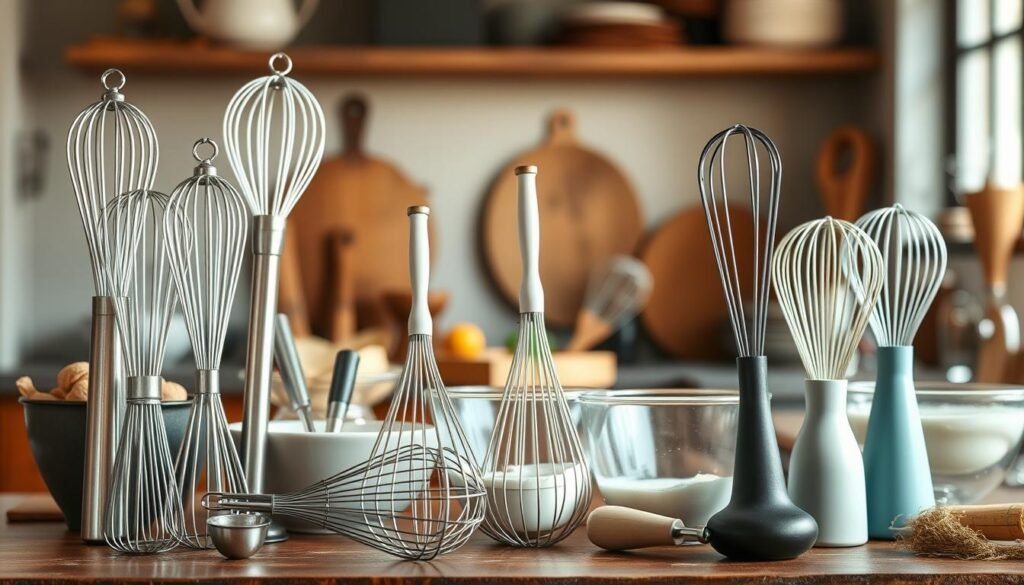
Kitchen Whisk Guide: Choosing the Right Tool
Understanding different whisk types helps you select the right tool for each cooking task. Each whisk design serves specific purposes in the kitchen.
Essential Whisk Types
- Balloon whisk – wide, bulbous shape for whipping cream and beating eggs
- French whisk – narrow, elongated wires for sauces and general mixing
- Flat whisk – flattened design for shallow pans and gravies
- Ball whisk – metal balls instead of wires for deep containers
- Coil whisk – spring-like design for thick batters and dough
- Mini whisk – small size for single servings and small bowls
Proper Whisking Techniques
- Choose the right motion. Use fast, vigorous strokes for whipping air into cream or eggs.
- Adjust speed for task. Gentle, sweeping motions work better for thick sauces and batters.
- Use proper angle. Hold the whisk at a slight angle to maximize contact with the mixture.
- Work in circular patterns. Move the whisk in figure-eight or circular motions for even mixing.
- Lift and fold. For delicate batters, lift the whisk up to incorporate air gently.
Material Comparison
- Stainless steel – durable, rust-resistant, works with all cookware types
- Silicone – safe for non-stick surfaces, heat-resistant, easy to clean
- Nylon – lightweight, heat-resistant, won’t scratch delicate surfaces
Whisk Selection Tips
Start with these two essential whisks for most home cooking needs.
- A medium French whisk for everyday mixing and sauces.
- A balloon whisk for whipping cream, eggs, and light batters.
- Add specialty whisks like flat or mini varieties as your cooking skills develop.
Material Options for Kitchen Whisks
Stainless steel – Most durable option that resists rust and works with all cookware types including metal pans.
Silicone – Best choice for non-stick cookware as it won’t scratch surfaces and handles heat well.
Nylon – Lightweight alternative that’s heat-resistant and gentle on all pan surfaces.
Whisk Techniques and Best Practices
- Aeration technique – Use rapid, lifting motions to incorporate air into egg whites and cream.
- Emulsification method – Gradual, steady whisking helps oil and vinegar combine in dressings.
- Sauce smoothing – Constant, gentle whisking prevents lumps in gravies and custards.
- Batter mixing – Light, folding motions keep muffin and pancake batters tender.
- Temperature control – Whisk continuously when heating sauces to prevent scorching.
Common Whisk Types and Their Uses
Balloon whisk – Wide, bulbous design perfect for incorporating maximum air into mixtures like whipped cream and meringues.
French whisk – Narrow, elongated shape ideal for sauces, dressings, and general mixing tasks in deeper bowls.
Flat whisk – Flattened profile designed for shallow pans, perfect for making gravy and roux without scratching.
Ball whisk – Metal balls replace traditional wires, excellent for reaching into narrow containers and mixing thick batters.
Mini whisk – Small size perfect for single servings, small bowls, and precise mixing tasks.
Estimated Cost Per Whisk
- Basic stainless steel whisk – $8-15
- Quality French whisk – $15-25
- Silicone whisk set – $20-30
- Professional balloon whisk – $25-40
Average cost for essential whisk collection: $30-50 for home kitchen needs.
Prices are estimates based on average US kitchen supply costs and will vary by location and brand.
How to Care for Your Whisks
Clean whisks immediately after use with warm, soapy water to prevent food from drying between the wires. For stubborn residue, soak the whisk briefly before scrubbing gently.
Dry thoroughly after washing to prevent rust on metal whisks and store in a dry utensil drawer or crock. Avoid storing whisks where the wires can get bent or damaged by other utensils.
What to Use Your Whisk For
Whisks excel at mixing batters, whipping cream, making smooth sauces, and incorporating air into egg whites. They’re also perfect for combining salad dressings and emulsifying vinaigrettes.
Beyond mixing, whisks work well for scrambling eggs directly in the pan, mashing soft foods like avocados, and even cleaning stubborn bits from pot bottoms during deglazing.
Recommended Kitchen Whisks
* As an Amazon Associate I earn from qualifying purchases at no extra cost to you.
Frequently Asked Questions
What is the primary function of a whisk in cooking?
A whisk mixes, aerates, and emulsifies ingredients. It’s key for tasks like baking and making sauces.
What are the different types of whisks available, and what are they used for?
There are many whisks, like balloon, French, flat, and specialty ones. Each is for different tasks, like whipping cream or making sauces.
What materials are whisks typically made of, and what are their benefits?
Whisks come in materials like stainless steel, silicone, and nylon. They’re durable, non-stick, and easy to clean.
How do I choose the right whisk for my cooking needs?
Think about the material, size, weight, and balance of the whisk. Also, consider what you’ll use it for.
How do I properly care for and maintain my whisks?
Clean your whisks often, dry them well, and store them in a dry place. Keep them away from other utensils that might damage them.
What are some common whisking mistakes to avoid?
Avoid not aerating enough, overmixing, and using the wrong whisk. These can lead to bad texture, consistency, and flavor.
Can a wire whisk be used for tasks other than mixing and aerating?
Yes, a wire whisk, like a stainless steel one, is good for scraping bowls and folding ingredients. It’s very versatile.
Are there any specific whisking techniques I should know for different tasks?
Yes, different tasks need different whisking techniques. Knowing these can improve your cooking and baking results.
What is the significance of aeration and emulsification in cooking, and how does a whisk facilitate these processes?
Aeration and emulsification are key in cooking. They help mix ingredients and create stable mixtures. A Kitchen Whisk Guide explains how the tool’s design helps with these essential processes, making it vital for many recipes.
Want to save this for later? Pin it!


