

| DifficultyEasy | Total Time15 min | Prep Time15 min | Cook Time0 min |
| ServesN/A | Cost Per ServingN/A | CaloriesN/A | Recipe TypeGuide |
This Food Storage Containers guide helps you choose the right containers to keep food fresh and organize your kitchen. The right containers reduce food waste and create a more efficient cooking space.
Quality storage solutions make meal prep easier and help maintain food safety standards throughout your kitchen.
Why You’ll Love This Guide
- Practical advice – Clear guidance on choosing containers for different needs.
- Material breakdown – Compare glass, plastic, and alternative storage options.
- Safety focus – Learn about BPA-free and food-safe materials.
- Space-saving tips – Find stackable and efficient storage solutions.
- Money-saving – Reduce food waste with proper container selection.
Food Storage Containers Guide
Having the right food storage containers is key for a tidy kitchen. They help keep food fresh and cut down on waste.
For leftovers, clear glass or plastic containers with tight seals are perfect. These containers keep food fresh and help organize your fridge.
Why Quality Storage Containers Matter for Food Preservation
Choosing the right storage containers is key for keeping food fresh and your kitchen tidy. Good containers help food stay fresh longer.
This means less spoilage and waste. Airtight containers are vital for keeping food fresh by blocking air, moisture, and contaminants.
Organization and Space Efficiency
Quality storage containers also help with kitchen organization. They offer a neat way to store food and utensils.
Stackable containers save space, making it easier to find what you need. Uniform containers also make your kitchen look better and bring order to meal prep.
Types of Storage Containers for Different Needs
Different occasions need different storage containers. Each has its own benefits for meal prep, storing leftovers, or organizing your pantry.
Meal Prep Containers with Compartments
Meal prep containers with compartments are great for planning meals. They help you portion out your meals and keep food fresh and organized.
One big plus of meal prep containers is portion control. They let you divide meals into parts to avoid overeating and keep your diet balanced.
Leftover Storage Solutions
For leftovers, you need containers that are airtight and leak-proof. Stackable containers are perfect for keeping leftovers fresh and organized in your fridge.
Look for containers with airtight seals to prevent leakage, stackable design for efficient storage, and clear visibility to see contents.
Pantry Organization Containers
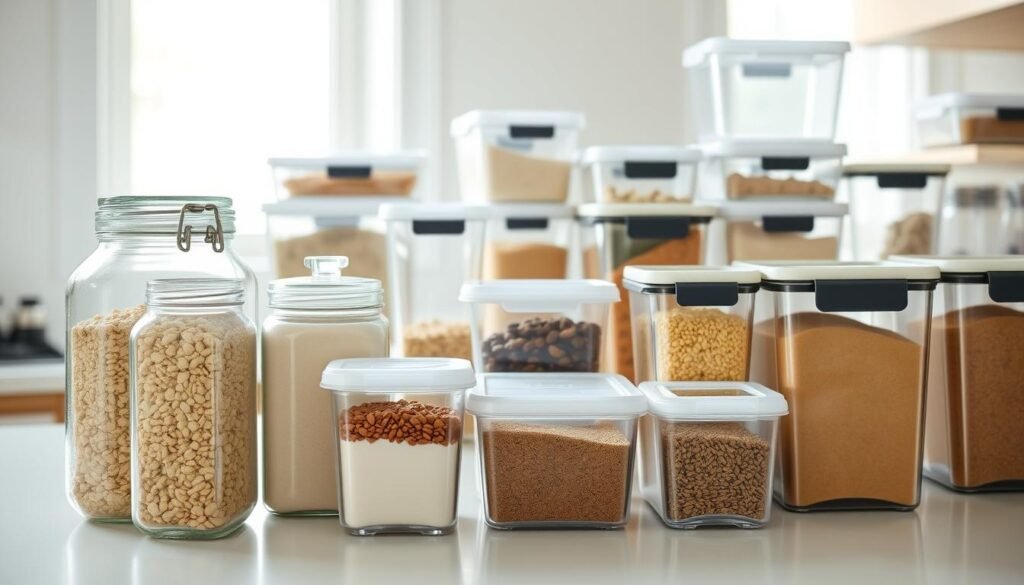
Keeping your pantry organized is key for a clutter-free kitchen. Plastic storage bins and pantry storage containers help keep ingredients fresh and your pantry tidy.
When picking pantry containers, think about size, material, and design. Choose ones that are easy to label and have a tight lid to keep food fresh.
Materials and Safety: Choosing the Right Container
The safety and durability of storage containers depend on the materials used. Knowing what each material offers can help you choose the right option.
Glass vs. Plastic Storage Options
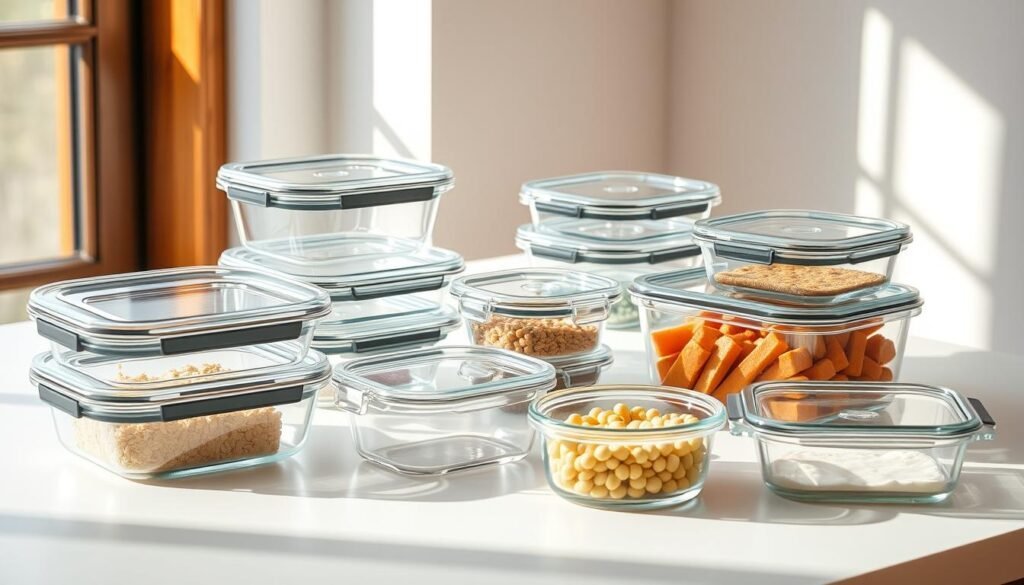
Glass storage containers are tough and don’t stain easily. They’re also non-porous, perfect for food without chemical transfer.
Plastic containers are lighter and cheaper than glass. But make sure they’re BPA-free containers for safer food storage.
BPA-Free and Food-Safe Materials
Storage container safety is key for food storage. BPA-free and food-safe materials prevent chemical transfer to food.
When buying containers, look for safety certifications and avoid containers with scratches or damages that could harbor bacteria.
Silicone and Stainless Steel Alternatives
Silicone containers are flexible, great for odd shapes and microwave use. Stainless steel containers are tough and corrosion-resistant.
Both materials are generally durable and long-lasting options for food storage needs.
Essential Features to Look for in Quality Storage Containers
To get the most from your storage containers, focus on key features. Good containers keep food fresh and make your kitchen tidy and efficient.
Airtight Seals and Leak-Proof Designs
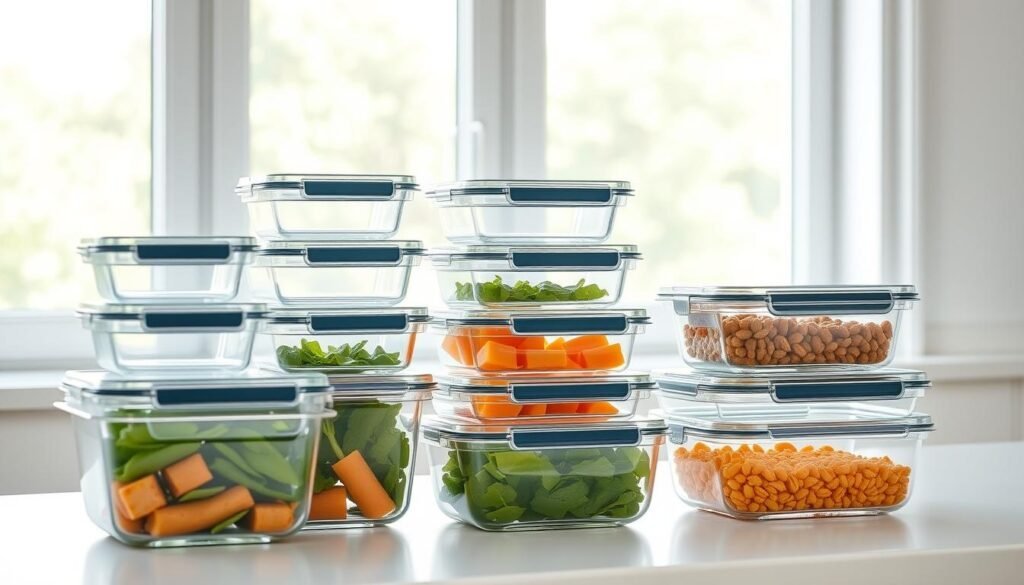
An airtight seal is key for keeping food fresh. It stops air, moisture, and other contaminants from getting in.
A leak-proof design is vital for liquids or wet foods. Find containers with silicone or rubber gaskets for a tight seal.
Stackability and Space-Saving Designs
Stackable containers are a must for saving space. They help keep your kitchen tidy and free of clutter.
Go for containers with flat lids for easy stacking. Think about modular systems for different sizes.
Microwave, Freezer, and Dishwasher Safety
Storage containers are more useful if they’re safe for different appliances. Microwave-safe containers make reheating easy while freezer-safe containers let you store food longer.
Check the maker’s advice for appliance safety and choose containers from safe materials like glass or BPA-free plastics.
Container Selection Tips
Choose the right containers based on your specific needs.
- Glass containers work best for meal prep and reheating.
- Plastic containers are ideal for pantry storage and portability.
- Silicone containers excel for freezing and flexible storage needs.
Consider your kitchen space and storage requirements when selecting container types.
Substitutions
Glass containers – Ceramic containers with tight lids work for most storage needs.
Plastic containers – Glass containers offer a chemical-free alternative for food storage.
Silicone containers – Flexible plastic containers can substitute for some applications.
Tips and Variations
- Label everything – Use removable labels to track contents and dates for better organization.
- Size variety – Keep different container sizes on hand for various portion needs.
- Color coding – Use different colored lids to categorize foods by type or family member.
- Regular cleaning – Deep clean containers weekly to prevent odor buildup and maintain freshness.
Container Notes
Glass containers – Look for tempered glass options that resist thermal shock and breakage.
Plastic containers – Check for recycling numbers 1, 2, 4, or 5 for safer food storage options.
Lids – Ensure replacement lids are available from the manufacturer for long-term use.
Estimated Cost Per Container Set
- Basic plastic container set (10 pieces) – ~$15.00
- Glass container set (8 pieces) – ~$35.00
- Premium silicone set (6 pieces) – ~$45.00
- Stainless steel containers (4 pieces) – ~$25.00
Total investment range: ~$15-45 per set depending on material and quality.
Prices are estimates based on average US retail costs and will vary by location and brand.
How to Store and Clean Containers
Store containers in a dry cabinet at room temperature. Nest smaller containers inside larger ones to save space.
Clean containers with soap and warm water, then dry completely to prevent bacteria growth. Many containers are dishwasher safe for easy maintenance.
What to Use With These Storage Containers
Labels and markers help identify contents and track storage dates. Measuring cups ensure proper portioning for meal prep containers.
Consider vacuum sealers for long-term storage and flexible spatulas for easy food transfer into containers.
Recommended Storage Container Sets
* As an Amazon Associate I earn from qualifying purchases at no extra cost to you.
Frequently Asked Questions
What are the benefits of using glass storage containers over plastic ones?
Glass containers are non-porous and durable. They can handle high temperatures, perfect for meal prep and are non-toxic and recyclable.
How do I choose the right size of storage containers for my needs?
Think about the food you store, how many people you serve, and your kitchen space. Pick containers that are airtight, leak-proof, and stackable to save space.
Are plastic storage containers safe to use in the microwave?
Not all plastic containers are safe for the microwave. Look for ones labeled microwave-safe and always follow the maker’s guidelines to avoid damage.
What are the advantages of using stackable storage containers?
Stackable containers save kitchen space and reduce clutter. They make organizing easier and are handy for food storage and transport.
Can I use storage containers for pantry organization?
Yes, food storage containers are great for pantry organization. Choose airtight, pest-proof containers to keep food fresh and organized in your pantry space.
Want to save this for later? Pin it!


