
| DifficultyEasy | Total Time15 min | Prep Time5 min | Cook Time10 min |
| Serves4 | Cost Per Serving~$15.00 | Calories0 kcal | Recipe TypeGuide |
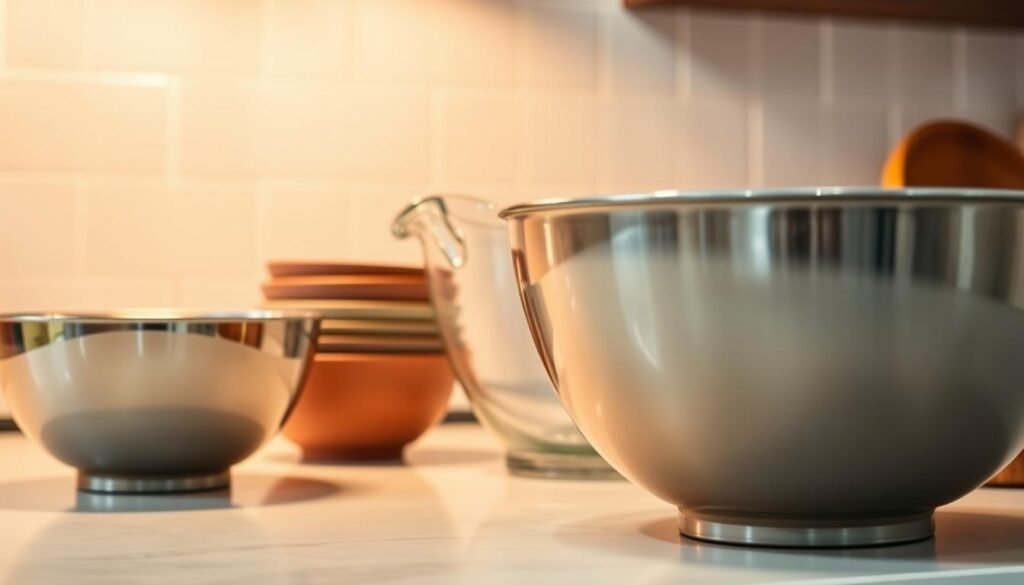
This Kitchen Essentials Mixing Bowls guide helps you choose the perfect mixing bowls for your kitchen setup. These versatile tools are fundamental for cooking, baking, and food preparation tasks.
Whether you’re a beginner cook or seasoned chef, the right mixing bowl set makes all the difference in your kitchen efficiency and organization.
Why You’ll Love This Guide
- Comprehensive – Covers all major mixing bowl types and materials.
- Practical – Real-world advice for choosing the right bowls for your needs.
- Budget-Friendly – Options for every price range and kitchen size.
- Expert-Backed – Information based on professional kitchen standards.
- Space-Saving – Tips for maximizing storage in small kitchens.
Kitchen Essentials Mixing Bowls Selection Guide
A comprehensive guide to choosing and using mixing bowls in your kitchen.
What You Need
- Kitchen space assessment
- Cooking style evaluation
- Budget consideration
- Storage space measurement
Steps
- Assess your needs. Consider your cooking frequency and recipe types.
- Choose material. Select based on durability, heat resistance, and budget.
- Pick sizes. Get a nested set with multiple bowl sizes.
- Check features. Look for non-slip bases and measurement markings.
Kitchen Essentials Mixing Bowls Guide
Mixing bowls are fundamental tools in every kitchen setup. They serve multiple purposes beyond simple mixing tasks.
Essential Features
- Multiple size options for different recipes
- Durable materials that resist staining and odors
- Non-slip bases for stable mixing
- Easy-to-clean surfaces
- Space-saving nested design
- Measurement markings for convenience
Selection Steps
- Evaluate your cooking style. Consider how often you bake, cook for groups, and use different mixing techniques.
- Assess kitchen space. Measure cabinet and counter space to determine optimal bowl sizes and storage needs.
- Choose primary material. Select stainless steel for durability, ceramic for aesthetics, or silicone for flexibility.
- Pick size range. Get a nested set with small, medium, and large bowls for recipe versatility.
- Check special features. Look for non-slip bases, pour spouts, and measurement markings.
- Test ergonomics. Ensure bowls feel comfortable to hold and use for extended periods.
Time Requirements
- Research Time – 10 minutes
- Shopping Time – 5 minutes
- Total Time – 15 minutes
Cost Information
- Basic plastic set – $15-25
- Stainless steel set – $25-45
- Premium ceramic set – $40-60
Professional Kitchen Tips
Choose the right mixing bowl material for your cooking style and kitchen needs.
- Stainless steel bowls work best for whipping cream and egg whites.
- Glass bowls are ideal for microwave warming and see-through mixing.
- Ceramic bowls retain temperature well for temperature-sensitive preparations.
- Silicone bowls fold for compact storage in small kitchens.
Material Options
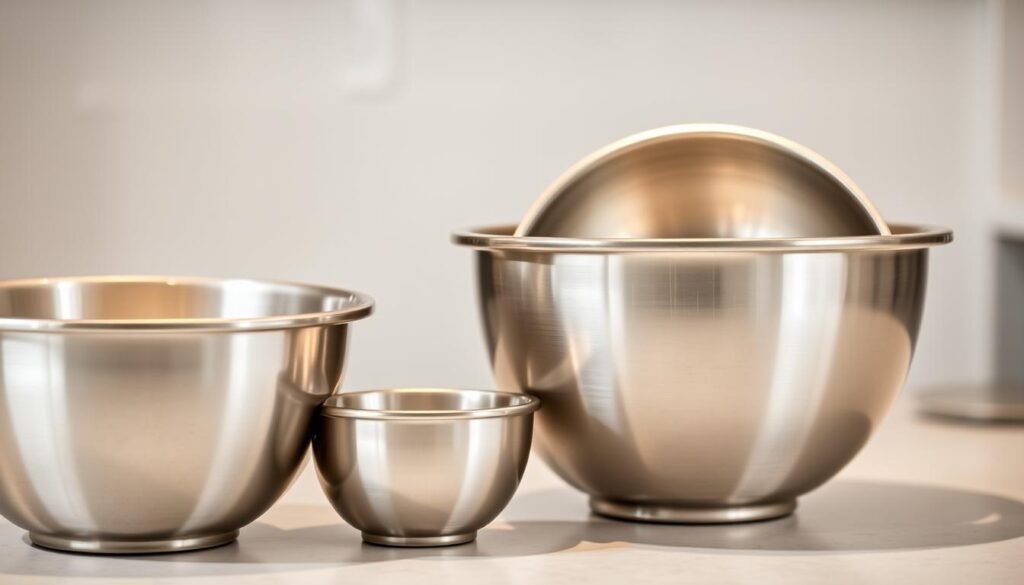
Stainless Steel – Most durable and versatile option for everyday use.
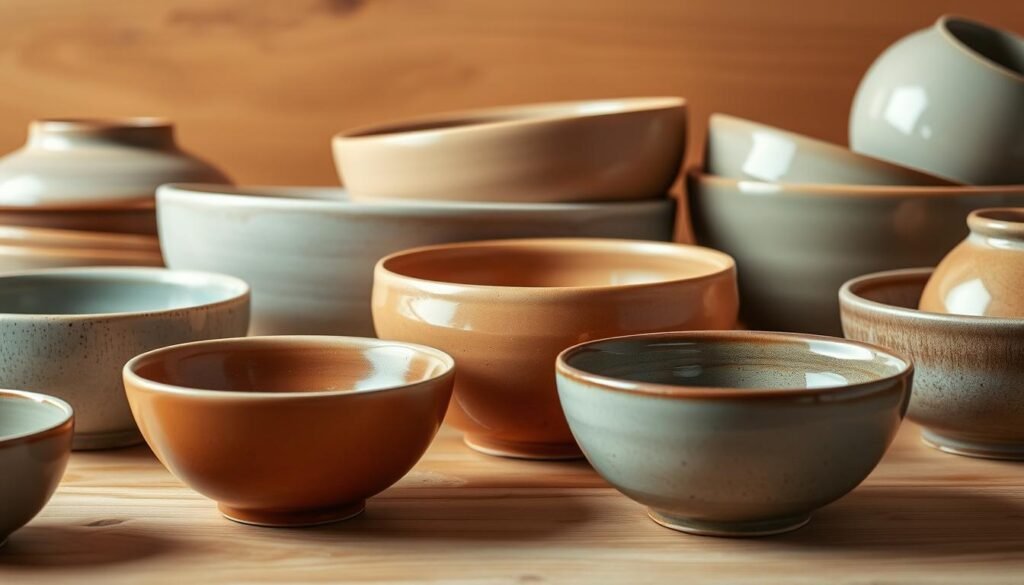
Ceramic – Beautiful appearance but requires careful handling to prevent chips.
Glass – Heat-resistant and non-reactive but heavy and breakable.
Plastic – Lightweight and budget-friendly but may stain and retain odors.
Silicone – Flexible and space-saving but can be expensive.
Tips and Variations
- Size Strategy – Get at least three different sizes: small (1-2 cups), medium (3-4 cups), and large (5+ cups).
- Nesting Feature – Choose bowls that nest inside each other to save 75% of storage space.
- Non-Slip Bases – Look for silicone or rubber bottoms that prevent sliding during vigorous mixing.
- Pour Spouts – Some bowls include spouts for easy transfer of batters and liquids.
- Measurement Marks – Interior volume markings eliminate the need for separate measuring cups.
Feature Notes
Non-Slip Bases – Essential for stability during mixing tasks, especially when whipping or beating.
Measurement Markings – Interior volume markings save time and reduce dirty dishes.
Nested Design – Multiple bowls that stack together maximize storage efficiency in small kitchens.
Ergonomic Handles – Some larger bowls include handles for easier lifting and pouring.
Estimated Cost Per Set
- Basic 3-piece plastic set – ~$15.00
- Mid-range stainless steel set – ~$30.00
- Premium ceramic or glass set – ~$50.00
- Professional silicone set – ~$35.00
Total investment for quality mixing bowl set: ~$25-50 depending on material and features.
Prices are estimates based on average US retail costs and will vary by location and brand.
How to Store and Maintain
Store nested mixing bowls in a clean, dry cabinet to prevent moisture buildup. Keep them stacked to save space and protect from chips or scratches.
Clean bowls immediately after use with mild dish soap and warm water. Check the FDA food storage guidelines for detailed cleaning recommendations.
What to Use With Your Mixing Bowls
Pair your mixing bowls with quality whisks, spatulas, and measuring tools for complete food preparation. A good stand mixer or hand mixer complements bowl sets perfectly.
Consider matching storage containers and prep bowls to create a cohesive kitchen organization system.
Recommended Kitchen Gear
* As an Amazon Associate I earn from qualifying purchases at no extra cost to you.
Frequently Asked Questions
What are the benefits of using stainless steel mixing bowls?
Stainless steel mixing bowls are tough and don’t scratch or corrode. They’re easy to clean and won’t react with acidic ingredients.
Can I use ceramic mixing bowls for high-heat cooking?
Ceramic mixing bowls can handle heat, but check if they’re safe for high temperatures. Always follow the manufacturer’s guidelines.
What is the advantage of using non-slip mixing bowls?
Non-slip mixing bowls stay put while you mix. This makes mixing safer and easier by preventing the bowl from sliding around.
How do I choose the right size of mixing bowl for my needs?
Think about what you cook most and how much you mix. Nested bowls save space and provide flexibility for different recipe sizes.
What are the benefits of a mixing bowl set with measurement markings?
Bowls with measurements make cooking easier. You can measure right in the bowl, saving space and reducing the need for extra measuring cups. Kitchen essentials mixing bowls with these features streamline your cooking process.
Want to save this for later? Pin it!