

| DifficultyEasy | Total Time5 min | Prep Time5 min | Cook Time0 min |
| Serves1 | Cost Per Serving~$25.00 | Calories0 kcal | Recipe TypeKitchen Tool Guide |
This Best Vegetable Peeler Guide helps you choose the right kitchen tool for faster, safer food preparation. Having the right peeler makes cooking more efficient and enjoyable.
A quality peeler does more than just remove vegetable skins – it saves time, reduces waste, and makes meal prep safer than using knives for delicate tasks.
Why You’ll Love This Guide
- Comprehensive – Covers all major peeler types and their best uses.
- Practical – Real-world advice for choosing the right tool for your needs.
- Time-Saving – Learn which peelers work fastest for different vegetables.
- Safety-Focused – Discover safer alternatives to knives for delicate peeling tasks.
- Expert-Backed – Insights from professional chefs and kitchen equipment experts.
Best Vegetable Peeler Guide
Complete guide to choosing the perfect peeler for your kitchen needs.
Key Features to Consider
- Sharp stainless steel or carbon steel blade
- Ergonomic handle design
- Rust-resistant materials
- Appropriate peeler type for your needs
Selection Process
- Identify your needs. Consider what vegetables you peel most often.
- Choose the type. Y-shaped for speed, straight for traditional use, julienne for garnishes.
- Check the material. Stainless steel offers durability and rust resistance.
- Test the grip. Ensure the handle feels comfortable in your hand.
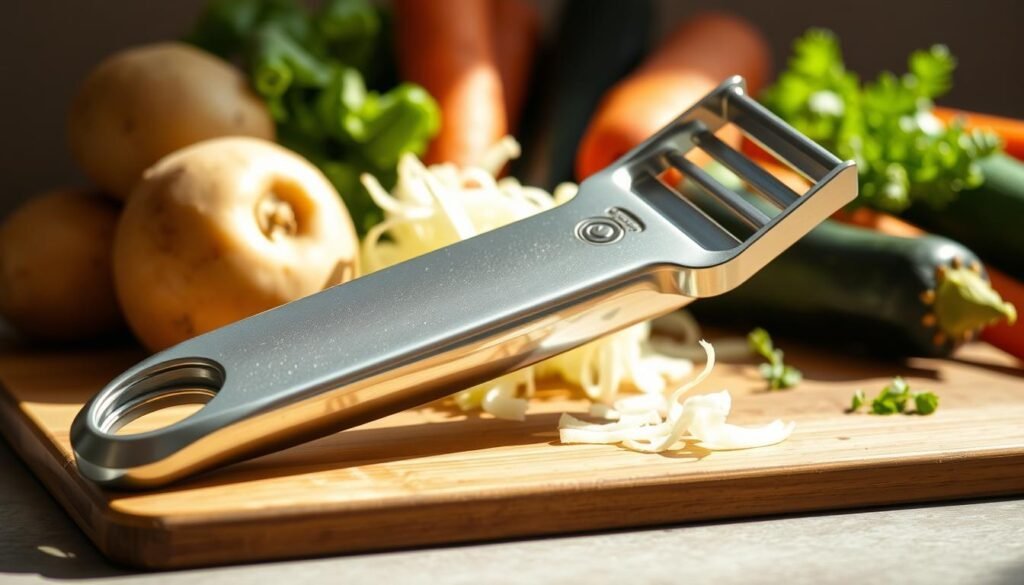
Best Vegetable Peeler Guide
Finding the right peeler transforms your kitchen prep work from tedious to efficient. The right tool makes all the difference in speed and safety.
Types of Vegetable Peelers
Y-Shaped Peelers
Y-shaped peelers offer the fastest peeling action with minimal effort. Their design allows for smooth, continuous strokes that work well with the natural curve of most vegetables.
Straight/Swivel Peelers
Traditional straight peelers provide reliable performance and precise control. They work especially well for detailed work and smaller vegetables.
Julienne Peelers
Julienne peelers create thin vegetable strips perfect for salads and garnishes. They offer versatility beyond basic peeling tasks.
Electric Peelers
Electric models handle large quantities efficiently but require counter space and power. They work best for bulk preparation tasks.
Material Comparison
Stainless Steel
Stainless steel blades resist rust and maintain sharpness longer than other materials. They can be sharpened like knives for extended use.
Carbon Steel
Carbon steel offers superior initial sharpness and edge retention. It requires more care to prevent rust but delivers excellent performance.
Ceramic Blades
Ceramic blades never rust and stay sharp for extended periods. They are lighter than steel but more fragile and prone to chipping.
Ergonomic Design Features
Handle Materials
Rubber and soft plastic handles reduce hand fatigue during extended use. Look for non-slip textures that maintain grip when wet.
Weight and Balance
Well-balanced peelers require less effort to control. The weight should be distributed evenly between the handle and blade.
Size Considerations
Different hand sizes require different handle dimensions. Some peelers offer adjustable features or multiple size options.
Maintenance and Care
- Cleaning – Wash with warm soapy water immediately after use
- Drying – Dry thoroughly to prevent rust formation
- Storage – Store in a dry location away from other utensils
- Sharpening – Maintain blade sharpness with regular honing
- Replacement – Replace when blades become dull or damaged beyond repair
Professional Chef Techniques
Learn these expert tips to maximize your peeler’s effectiveness.
- Peel in one direction following the vegetable’s natural curve.
- Apply gentle, consistent pressure for even results.
- Keep blades sharp for safer, more efficient peeling.
- Use the pointed tip for removing eyes from potatoes.
Versatile Applications
Beyond Basic Vegetables
Use your peeler on fruits like apples, pears, and citrus for zest. It works well for creating uniform strips for slaws and salads.
Creative Garnishes
Create decorative vegetable curls and citrus twists for presentation. Thin parmesan shavings add elegance to finished dishes.
Specialty Techniques
Learn julienne cutting for professional-looking vegetable preparations. Master citrus zesting for enhanced flavor in cooking and baking.
Choosing Your Perfect Peeler
For Everyday Home Cooking
Y-shaped stainless steel peelers offer the best combination of speed and durability. Look for comfortable ergonomic handles that fit your grip.
For Professional Kitchens
Carbon steel straight peelers provide precision and can handle heavy use. Multiple peeler types serve different preparation needs.
For Specialty Applications
Julienne peelers excel at creating garnishes and decorative cuts. Electric peelers handle large-scale preparation efficiently.
Estimated Cost Per Tool
- Basic Y-shaped peeler – ~$8.00
- Premium stainless steel peeler – ~$15.00
- Julienne peeler – ~$12.00
- Electric peeler – ~$45.00
Total for basic setup: ~$15.00 – roughly $15.00 for one quality peeler.
Prices are estimates based on average US retail costs and will vary by location and brand.
How to Store and Maintain
Store peelers in a dry drawer or utensil holder to prevent blade damage and rust formation. Keep them separate from other sharp tools.
Clean immediately after use with warm soapy water and dry thoroughly. Check the FDA food safety guidelines for proper kitchen tool maintenance.
What to Use With This Peeler
Pair your peeler with a sharp paring knife for detailed work and a cutting board with good traction. A vegetable brush helps clean produce before peeling.
Consider a compost bin or scrap bowl for efficient cleanup during meal preparation.
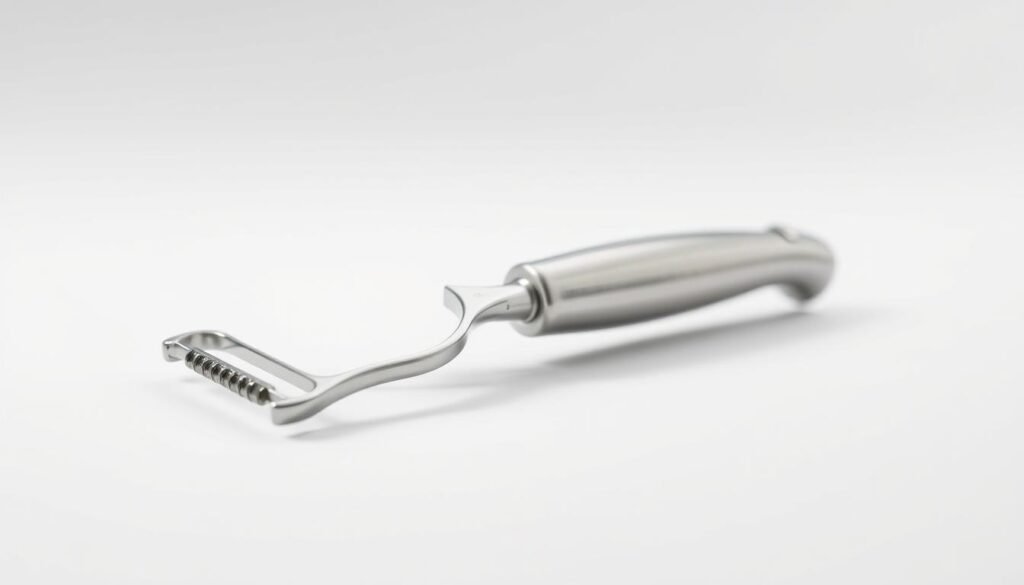
Recommended Kitchen Gear
* As an Amazon Associate I earn from qualifying purchases at no extra cost to you.
Frequently Asked Questions
What type of peeler is best for peeling potatoes?
A potato peeler or straight/swivel peeler works best for potatoes. It has a sharp blade and comfortable grip that makes removing skin simple and efficient.
Are steel peelers better than other materials?
Steel peelers, particularly stainless steel or carbon steel, are top choices. They last longer, stay sharp, and resist rust, making them perfect for daily kitchen use.
How do I maintain the sharpness of my peeler?
Keep your peeler sharp by cleaning and drying it after each use. Store it in a dry location and avoid using it on hard or frozen foods that can dull the blade.
Can I use a vegetable peeler for fruits?
Yes, vegetable peelers work well on fruits like apples, pears, and citrus. The sharp blade and ergonomic design handle various foods beyond just vegetables.
What are the benefits of using an ergonomic peeler?
An ergonomic peeler reduces hand fatigue and provides better control during use. This makes it especially valuable for people with arthritis or those doing extensive meal preparation with the Best Vegetable Peeler Guide recommendations.
Want to save this for later? Pin it!


